Set up a packing bench around the order sequence
Place materials around the order sequence and measure whether the revised layout actually reduces work.
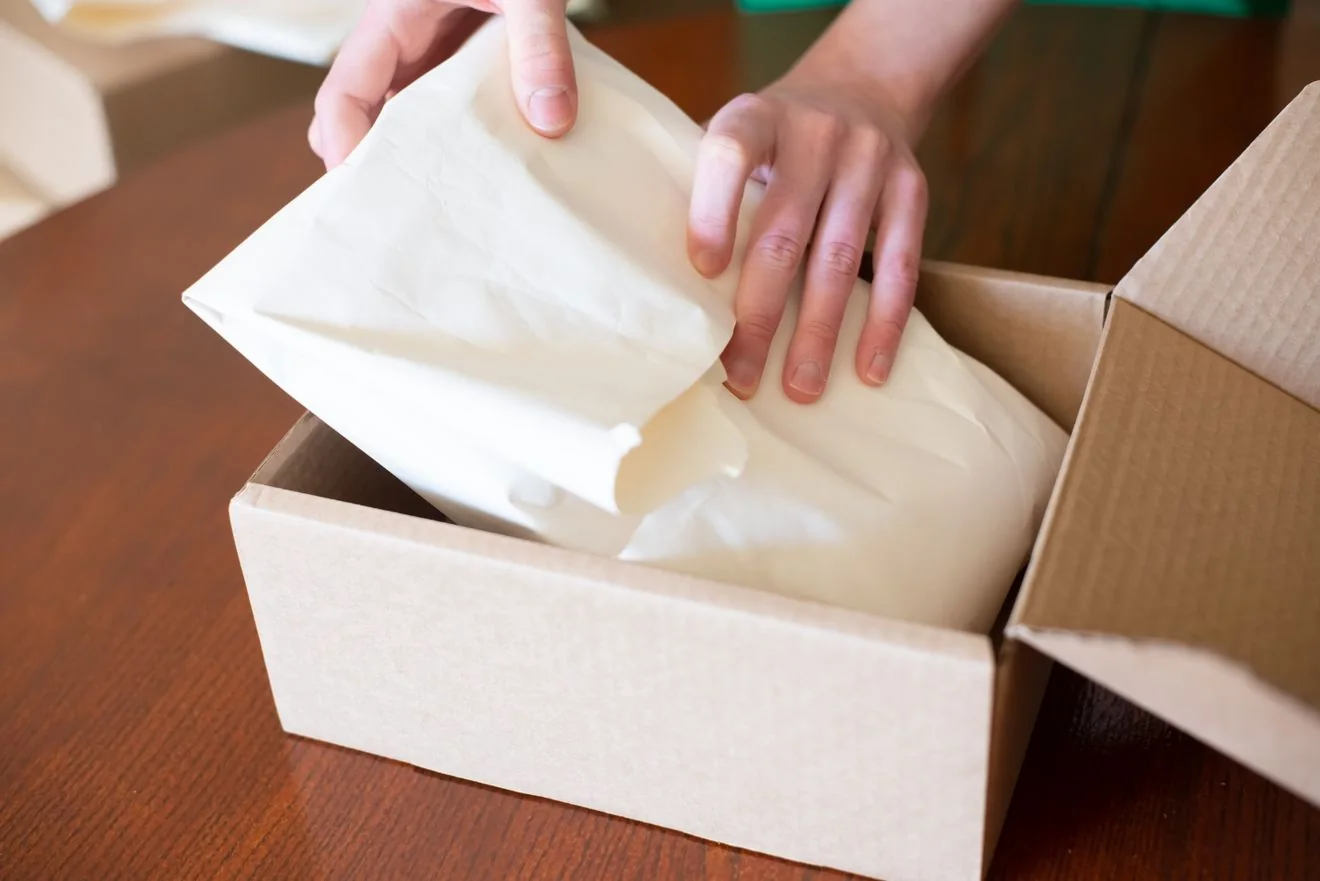
Observe an ordinary mix of orders
Watch several rounds of work before rearranging the bench. Note which materials are handled first, which items are checked before sealing, and where the pack travels afterward. Mark avoidable movement such as retrieving common tape, turning to a printer, or shifting a parcel just to read its label. Keep the observations grouped by pack type.
Lay out a repeatable order path
Reserve an explicit place for the unverified order and for the sealed parcel. Position high-use supplies so they can be replenished without mixing inventory with active orders. Keep the print and scan steps where the operator can associate a label with the correct carton. Try the proposed layout with multiple packers and consider the site's ergonomic review.
Measure steady capacity and refills
A measured active cycle of 62 seconds at 86% productive time yields about 50 orders per staffed hour. At 2.2 pieces of stock per order, 240 staged pieces and a trigger reserve of 42 imply a refill after about 1.8 hours. Use these as approximate triggers. A rush involving oversized orders may consume a different material mix and move much more slowly.
Keep a small change log
Record what moved, how long setup takes and how operators handle quality exceptions. Compare the median or distribution of cycle times with the same order mix and count reprints separately. Freeze the layout for the comparison window so results can be attributed to a specific change.