Run a repeatable cushioning trial
A repeatable bench trial helps a team compare two pack designs and understand what actually changed.
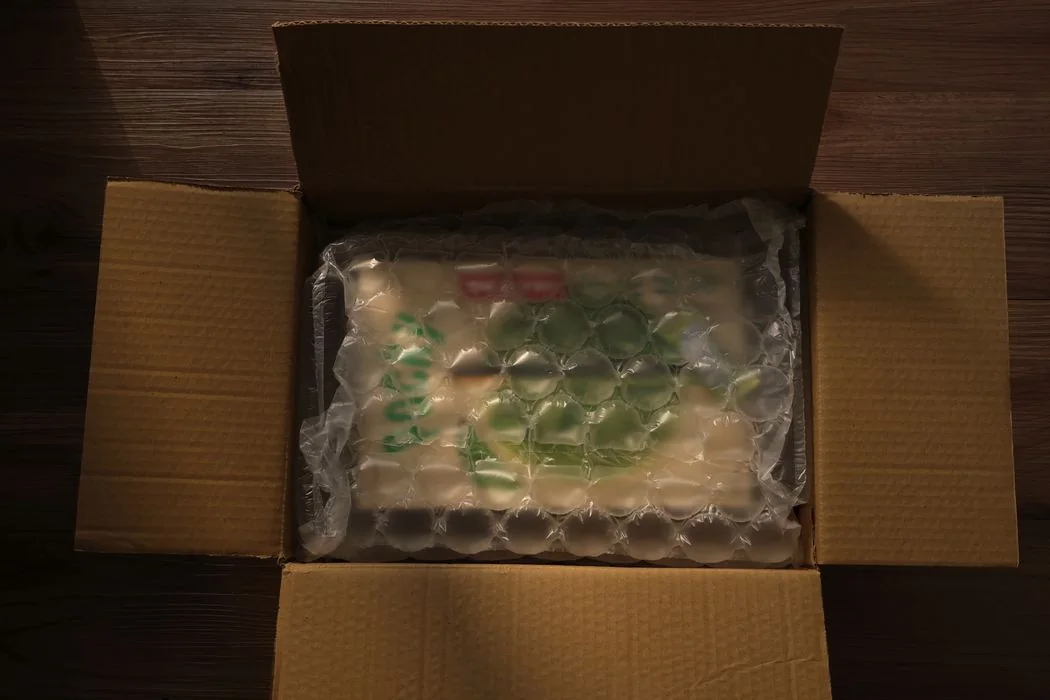
Define the failure you care about
Open an existing damaged shipment and distinguish product breakage, finish damage, abrasion, loose accessories, leakage and deformed retail packaging. Write criteria that a second inspector can apply. Photograph the damage with an orientation reference. If an insert keeps the item centered but scuffs it after handling, the failure should be visible in the trial record.
Change one variable and preserve a baseline
Prepare a reference pack and a trial with the same item lot, orientation, carton type and closure. Change the cushioning material or geometry deliberately. With a 7.2 kg product on four pads of 18 cm² each, the nominal static bearing pressure is about 9.8 kPa. That gives a check on the support arrangement, while the supplier's cushion curves and testing address compression and shock behavior.
Inspect the pack before and after handling
Mark the position of inserts and record initial height, gaps and movement. Use the applicable distribution test protocol or competent lab when requirements call for it. Reopen the carton the same way after each test. Compare change in fill height at the same point and note visible shifts even when the product passes the initial visual check.
Pilot on representative shipments
Choose a limited shipment cohort that reflects real order size and destination variation, and compare it with a similar reference cohort. Wait for claims to mature before treating a zero count as reassuring. Record the sample sizes, proportional damage and rework effort together. If the trial exposes a new failure mode, change its acceptance criteria before the next release.