Estimate stretch film use for a pallet wrap trial
Model geometric coverage, then measure the film that actually leaves the roll during an approved wrap trial.
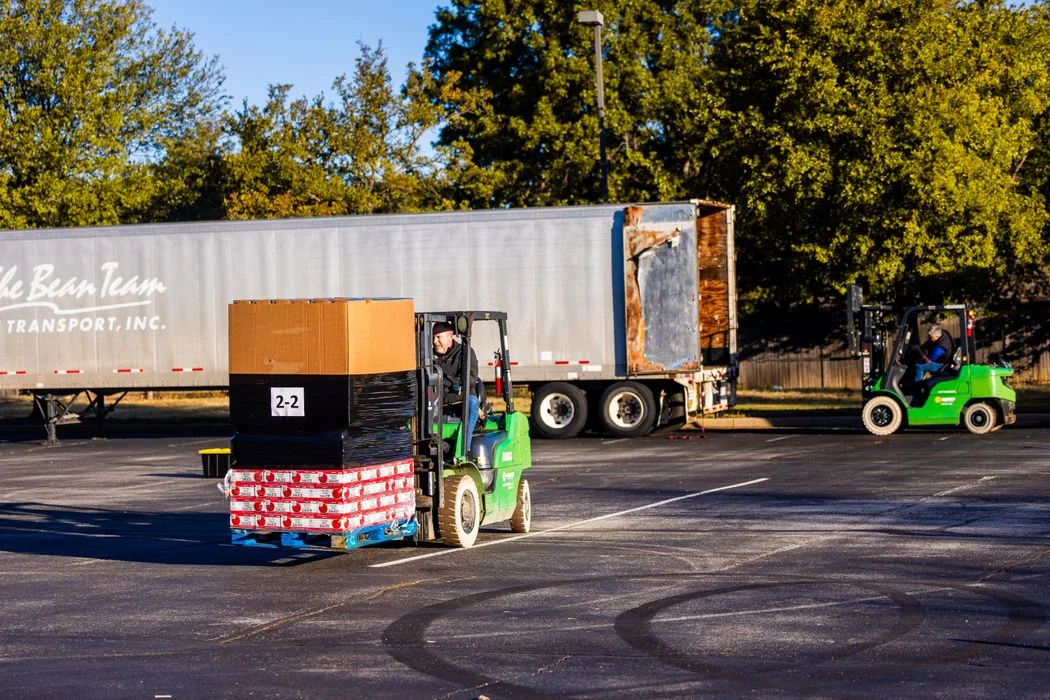
Start from the finished load shape
Measure the loaded footprint at the zones the film will travel through. A rectangular load that is 117 × 98 cm has a nominal perimeter of 4.3 m. Film can bridge a recessed panel or travel farther around bulging edges. The measurement helps estimate consumption, while wrap retention and load stability need a suitable method and validation.
Separate vertical coverage from reinforcing rotations
For 140 cm of intended coverage with a 50 cm band and 40% overlap, each additional band adds 30 cm of new coverage. The first band covers 50 cm, so four bands are needed geometrically. Lower or upper reinforcing rotations and changes in film width during application will alter the count and consumption.
Measure roll consumption in a repeatable way
Use weight before and after several comparable loads, accounting for cores and waste separately. If 28 m of unstretched, 50 cm-wide film at 20 µm and 920 kg/m³ went into one load, its calculated film mass would be 257.6 g. Use unstretched length rather than multiplying the load perimeter and rotations to infer film mass directly.
Preserve the tested process
Record machine settings or the manual pattern, load height, carton type, edge protection and film specification. Set separate observations for wrinkles, breaks, load movement and excessive distortion. Review trial loads with the personnel who define transport and handling requirements before rolling a change out.